
Building a Schoolwide House System

Midway through the 2017–18 school year, our school, Learning Community Charter School in Jersey City, NJ, grew from a small school to a larger one. Our small community, complete with founding teachers and families, changed. Our school consisted of three grade levels in one building: pre-K, elementary, and middle.
Middle school teachers knew their colleagues but not elementary teachers. Students in first grade and sixth grade did not know each other either. When we gathered for our monthly schoolwide community-building assemblies, our overall school spirit and sense of community felt flat. Middle school students talked to each other while elementary students received awards, and elementary teachers complained about middle school students’ disruptive hallway behavior. As the school leader, I saw how pressing it was to restore our smaller school culture, where everyone knew and supported one another.
During the summer of 2018, my assistant principal, Maureen Rexer, and I attended a Builder’s Lab seminar held by education consultant and author Robyn R. Jackson. We set out to re-envision our school’s mission, vision, and core values to unify our entire school community. We spent that week asking ourselves those important questions Jackson always poses to school leaders, “What are we building? What are we working on? What is my role?” We completed the week by drafting a new mission statement for our students to apply their knowledge and skills developed at school to make positive changes in their community. Our vision was for students to engage in learning experiences at every grade level to learn how to bring about those changes. We asked ourselves: Do our curriculum, schedule, and programs support our new mission and vision? Returning from Builder’s Lab, we spent the next year aligning them with our new mission and vision.
Building From What Defined Us
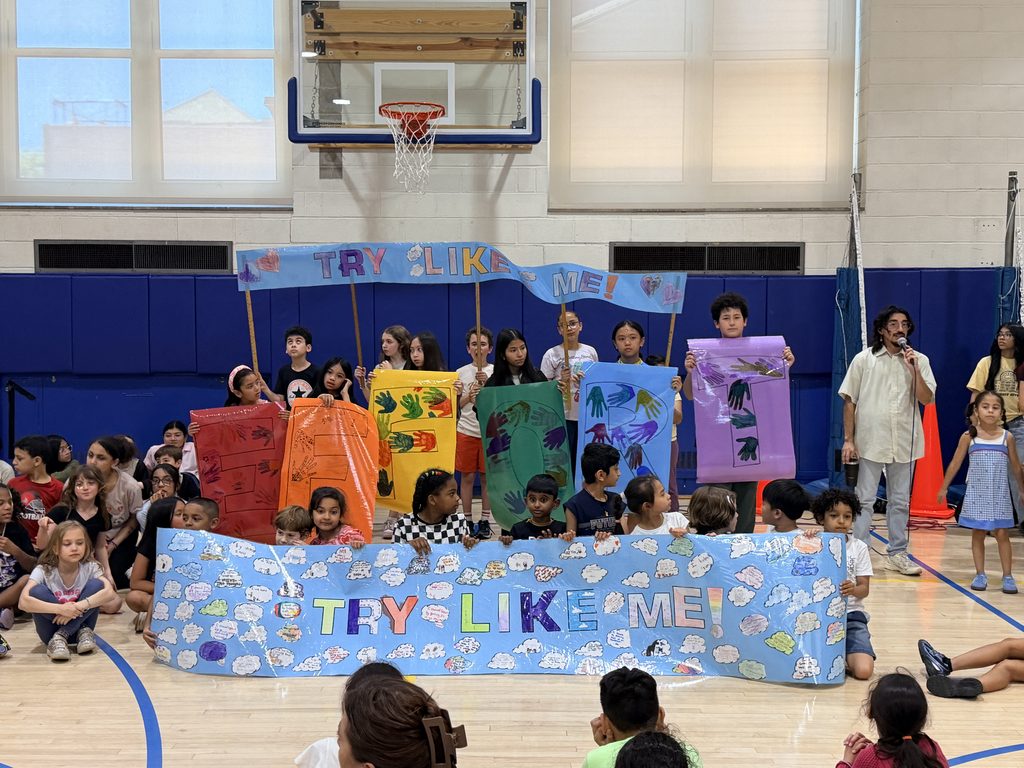
Our school was founded on six values: community, independence, respect, courage, leadership, and effort. These values spell the word “Circle,” and we call them our CIRCLE values. Since Learning Community opened its doors in 1997, the entire school has gathered for monthly assemblies to celebrate each of these values and present students and faculty members with awards associated with them.
Maureen and I knew that this key celebration of our school culture needed something of a redesign. We talked about the value of respect at “the respect assembly,” but we lacked a framework to support living out that value and to clarify what respect meant at school and in the world. We wanted to create a system for our students to regularly learn more about these values and develop their leadership skills grounded in peer support, individual and group success, and social-emotional learning. We thought that creating a monthly experience for students and faculty focused on collaboration and peer leadership would grow everyone’s capacity for leadership and resolve our issues concerning a disconnected school climate and culture.
Maureen and I started looking at house systems. The Ron Clark Academy House System intrigued us because students and faculty in each house formed a family when they came to school every day. A house system based on family directly aligned with our interest in reestablishing community and developing our students’ leadership skills. Houses, like families, are defined by traditions and rituals. Houses have names, colors, and animal mascots, origin stories, and even secret salutes.
We realized we could build six houses based on our school’s CIRCLE values. Houses could be a supportive family where kindergarten students could get to know eighth graders, and teachers across grade levels could collaborate on work rooted in our mission and vision while developing deeper professional and personal relationships. A house system, with its emphasis on community and culture, presented a way to connect with who we were through our CIRCLE values and to prepare ourselves for the future by using it to support our mission and vision of leadership development for our students.
Creating the House System
We formed a house steering committee in the fall of 2018, and it has never disbanded. The committee includes diverse members of our faculty representing middle school, elementary school, arts teachers, and teacher aides. The committee’s first task was to build our house system from the ground up. Using Ron Clark Academy as a model, we created foundational materials for each house to create their stories, rituals, and symbols. We also determined that monthly house meetings would be run by student leaders, ideally four to six middle school students, and that one to two faculty members from each house would support student leaders with logistics, feedback, and materials management.
We created a dedicated time during our weekly schedule when the entire school would participate in house meetings for 90 minutes. We even designated areas within the building where the houses could meet. Houses were also required to engage in an annual community service project and present their specific CIRCLE value at our monthly CIRCLE assemblies.
Houses could be a supportive family where kindergarten students could get to know eighth graders, and teachers across grade levels could collaborate on work rooted in our mission and vision.
During our faculty in-service week of 2019, we presented our new mission and vision statements to everyone. We explained how the house system could build community and enhance our goal of teaching student leadership skills. We sorted the entire faculty and sent them off to create the colors, rituals, animals, and origin stories of their houses. Two hours later, each founding group of faculty members returned to share their house’s origin stories, what they celebrated, their animals, and colors.
During the first week of school, we applied a random sorting model to select students for each house and made a significant error. Our random sorting led to three houses with more students, and other houses comprised primarily of younger or older students. Correcting this error took several years to address, and I advise anyone seeking to start a house system at their school to design a student-sorting process that is structured to create evenly distributed houses with the same overall numbers and grade-level representation.
Two years into our house system, we created a stipend position for a teacher to sort students and work as an adviser and mentor for teacher and student house leaders. This position enables new students and faculty members to be smoothly sorted and onboarded into their houses. It also provides ongoing support for anyone in need of ideas or feedback on house projects. After six months of running our house system, in 2019, we faced a new challenge: a global pandemic.
How Our House System Evolved
Going remote in March 2019 had the potential to end our new house system. We resolved to rebuild school remotely so that what our students and faculty loved about school would remain, keeping us connected as a community during a frightening and uncertain time. Our steering committee played an integral role in planning how to adjust the house system during remote instruction. They maintained that, just as we moved instruction and community events remotely, we could do the same with our house meetings.
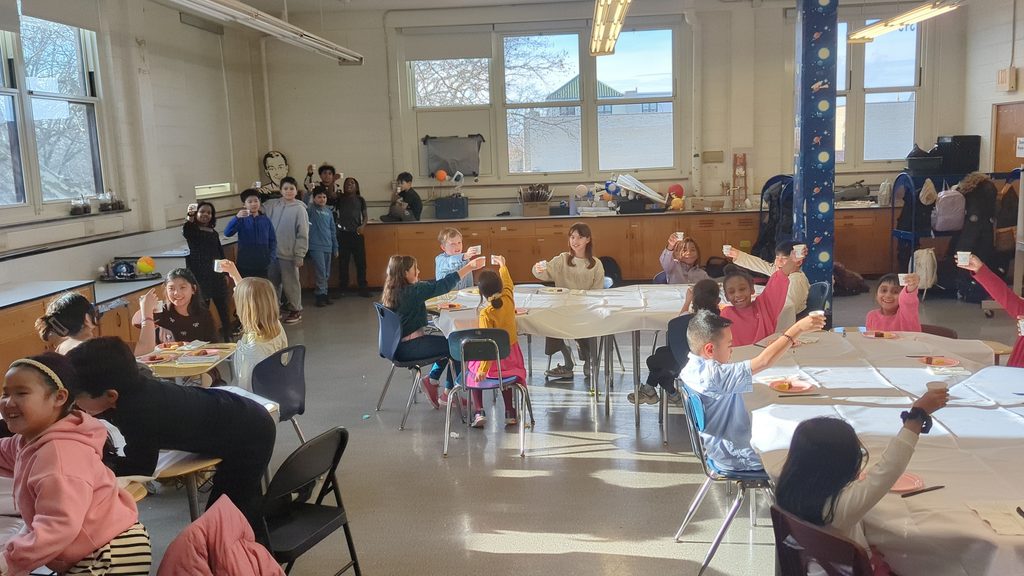
We decided to host house meetings via Zoom and have students from each house move into breakout rooms. I remember the first day we tried it about a month into remote learning. These house meetings were not connected to grading and were not mandatory to attend, and yet almost our entire student body logged in to participate. We knew then that, although our house system was less than a year old, we were starting to create families that students and faculty clearly valued. Learning Community Charter School did not see the drop in attendance or academic performance associated with the pandemic. I credit the house system with keeping our students engaged, supported, and continuing to make academic progress.
Returning from the pandemic, our faculty pointed out that they had to plan house meetings in addition to preparing for their classes. When developing the house system, we wanted it to be a unique opportunity, not additional work. Maureen and I realized that using half an hour from our monthly faculty meetings provided time for collaborative planning, not only for faculty but also for them to meet with the house student leaders to work on their plans for upcoming house meetings.
Our house system is now in its sixth year. We are proud that when our middle school students compete in sports playoff games or perform in plays, their younger house members show up to cheer them on. Middle school teachers have developed collaborative projects with elementary teachers based on professional relationships formed in their houses. The house system enables us to challenge the educational status quo regarding collaborative learning by allowing it to be both teacher- and student-led.
During house meetings, students have learned about Black and Latino history and proper etiquette. They have supported wolf sanctuaries, participated in local park cleanups, led food drives, and gathered socks for people who are unhoused. They have played countless games and art projects, and celebrated holidays and cultural awareness months.
In my own house, “Leadership,” we start all our house meetings by folding up two fingers to make wolf ears (our animal), and we all howl like wolves. We end every year with a celebration recognizing our student house leaders and eating Bugles, which we believe look like wolf claws.
Our house system challenges us, as a school, to put leadership in everyone’s hands. We continually revisit how it supports our mission and vision through the work of our steering committee, ensuring it remains relevant and integral to who we are as a school community. As school leaders, we constantly think about doing more for our students; a house system provides a blank canvas to do just that.
Colin Hogan, EdD, is the head of school at Learning Community Charter School in Jersey City, NJ.
References
Casas, J. (2017). Culturize: Every student. Every day. Whatever it takes. Dave Burgess Consulting.
Fisher, D., Frey, N., & Alamarode, J. (2020). Student learning communities: A springboard for academic and social-emotional development. ASCD.
Jackson, R. R. (2021). Stop leading and start building: Turn your school into a success story with the people and resources you already have. ASCD.